♦️ Sounding like McKinsey is killing your consulting firm’s pipeline. Here’s why
|
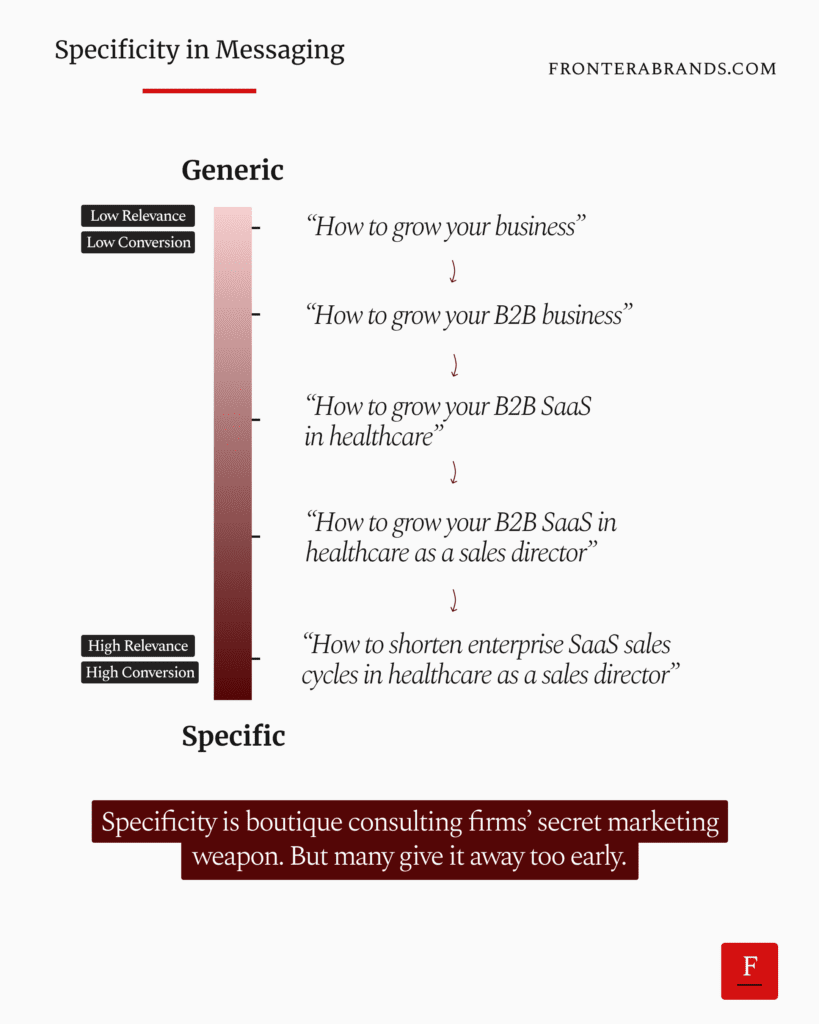
Boutique consulting firms have a secret marketing weapon that larger firms lack. It’s specificity. Let me explain with an example. Look at this:
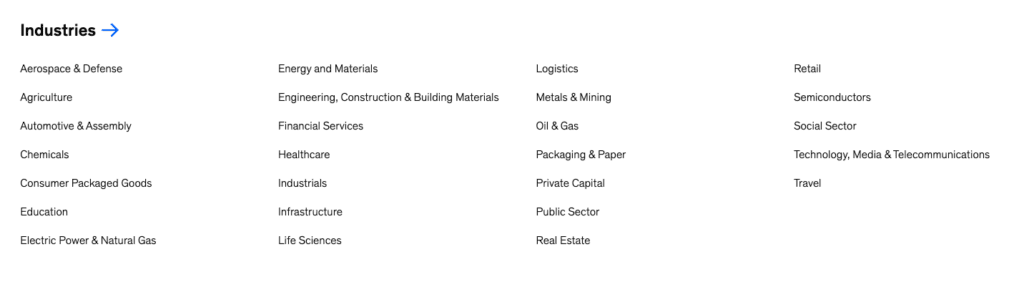
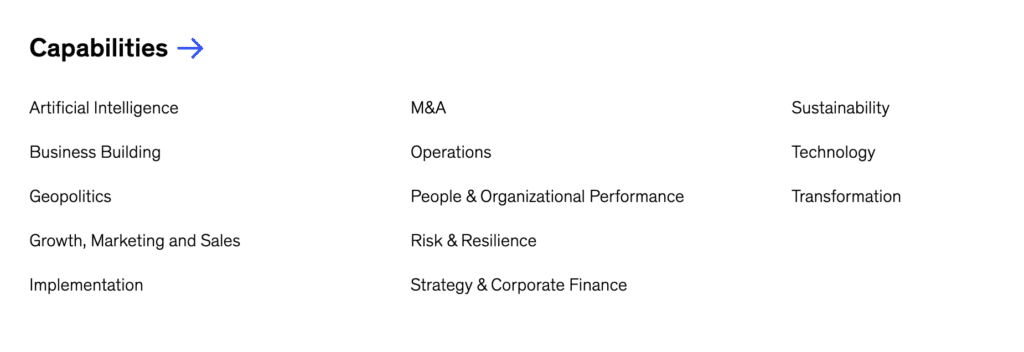
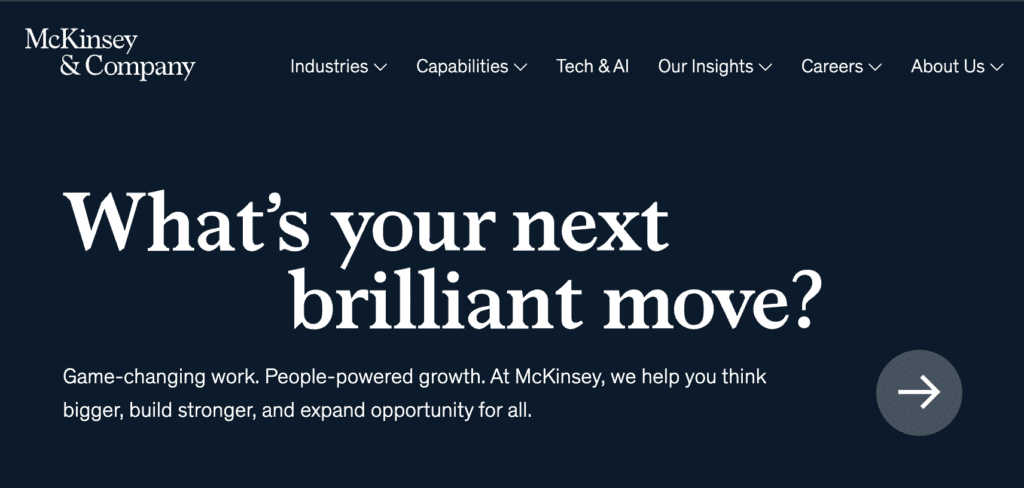
The more specific you get, the more relevant your firm becomes to a specific audience. They intuitively say: “This is for me.” So among dozens of other things trying to catch their attention, they have to click that one. And if they like what they see, they check your firm’s site and social profiles. If what they see there is also specific, they want more. Maybe they subscribe to your newsletter. Maybe they give you a follow on social media. That starts a chain of interactions where they eventually hire your firm. And compounding this specificity over time is what makes consulting firms an authority. But most boutique firms give up this weapon so early. They have the illusion that they have to add “ands” to their positioning to grow. Whether to their ideal client profile. Or to their services. But every “and” costs them specificity. Look at McKinsey’s site. They list dozens of industries and capabilities. Their website, content, and ads have to cater to hundreds of client problems and outcomes.
So they have to use vague messaging to cover it all. They can’t be specific. Because they do everything for everybody.
Many boutique firms look at these large firms and assume that’s what growth looks like. So if they get a referral from a new industry, they immediately add them to their positioning. “We help SaaS and healthcare businesses.” Great. With that single ‘and’ addition to their positioning: Their website has to talk to both these industries that have different needs. Their content, ads, and sales decks have to be relevant to both. But some firms don’t stop there. In a few months, they get another project through the founder’s network. So they add one more just-in-case. “We help SaaS, healthcare, and retail businesses.” But that’s not it. The addition also happens on the services side. After all, all these clients ask for different things. And some firms can’t say no. “We do product development, automation, and AI.” So this boutique firm might be making $10 million in revenue. But they already start sounding like $15 billion McKinsey. Obviously, without 40,000 employees or a $800 million marketing budget to support that many things. Now their website copy has to be even more generic. Their content has to talk about 20 different topics. So their conversion drops across the board. Prospects don’t see that firm as an expert in any area anymore, but just another ‘provider’. And these firms wonder why their marketing doesn’t work. They wonder why their growth stalls. Don’t get me wrong. Every boutique firm can eventually add new services or expand their ideal client profile. But that ‘eventuality’ should come much later. After all, before adding ‘ands’, why not use the power of specificity to its potential first? Why not grow by becoming an authority in the space you’re already in? Your firm does exceptional work. So why does growth still feel like a grind?It usually comes down to three things: Prospects can't find you or hear from you consistently (distribution). They don't understand your expertise and value through your content (messaging). They can't tell what makes your firm different (positioning). We help consulting firms solve all three. Following our engagement, you end up with:
From there, we continue as your ongoing partner for thought leadership content or guide your team to execute the strategy. Want a pipeline that finally matches the quality of your work? Fill out this form. Let’s talk. In case you missed it:
And you can connect with me here on LinkedIn. Ozan |
Frontera
Join 10,000+ B2B founders getting the strategies of iconic brands.
Back in 2008, I started going to the gym. I loved it. Lifting weights, discovering different exercises, the feeling after a good training… I loved it so much that in a few years I became very muscular. People thought I was using steroids. Because not many people went to the gym, knew training programs, or ate right. Now I see young guys who are the age I was in 2008. They are all muscular. They have their straps and belts for weightlifting. And they know what they are doing, much more than I...
There’s a quote attributed to John Maynard Keynes: “It is better to be roughly right than precisely wrong.” I see how this plays out in the way consulting firms approach marketing. There are two types of firms: Directionally right and precisely wrong ones. What drives precisely wrong firms is their need for certainty. Uncertainty is scary. But business and marketing are uncertain domains by their nature. That’s why their executives cling to some beliefs and playbooks. And they over-optimize...
Something surprises me every time I talk to consulting firm executives. They all have proprietary frameworks refined over years of client work. Their clients are impressed by their expertise. But none of that comes through their content. So there is a disconnect between what prospects see and these firms’ real expertise. Why does this happen? Why can’t all these consulting firms full of deep expertise seem to convey it? From what I see, there are three main reasons: 1. Intellectual Property...