Most boutique consulting firms can get more return from their marketing by cutting things out. Nassim Taleb calls this Via Negativa. It means the negative way in Latin. Instead of adding new things to achieve a goal, you cut things out. You get to the solution not through addition, but subtraction. I’ve realized a lot of the advice we give to our clients follows this. Especially the firms that had already been investing in marketing without enough ROI. Because most firms try to do, offer, and...
3 months ago • 2 min read
Boutique consulting firms are built on a handful of beliefs that drive early growth. These beliefs work. They bring in the first clients, build revenue, and get the firm to 7 figures. But at some point, the firm outgrows them. And the beliefs that drove growth become the reason it gets stuck. After working with 70+ boutique consulting firms, we keep seeing the same 6 go-to-market beliefs that hold firms back: Limiting belief #1: “The more services we offer, the more revenue we’ll capture.”...
3 months ago • 3 min read
Every consulting firm wants to get more clients. The multi-million dollar question is: “How?” We could answer this with many abstract ideas and tactics. But I realized there is an easier way. To think about a single buyer. A recent discovery call I had with a consulting firm founder inspired me for this. He joined the call. And the first thing he said was: “Ozan, I don’t know how I found out about Frontera, but I love your content!” After thanking him, I told him how he found us from our CRM,...
4 months ago • 6 min read
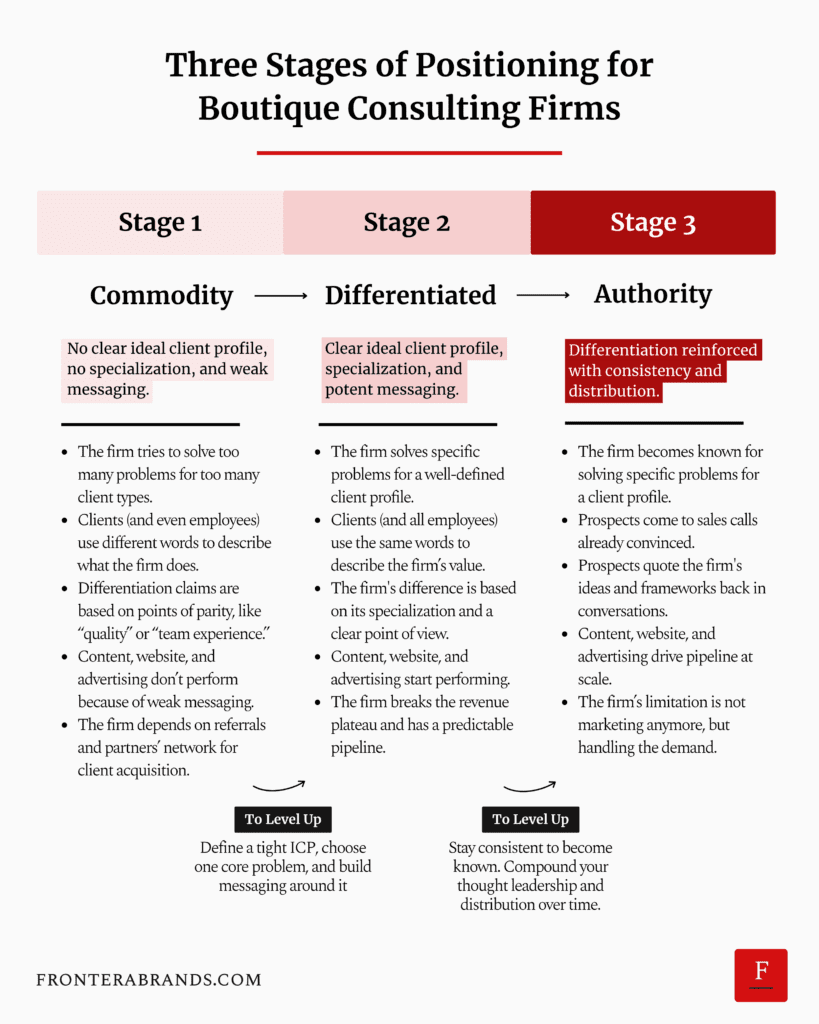
Every boutique consulting firm wants to be seen as an authority. But most skip a stage that makes authority possible. That stage is choosing what to be known for. Think about it. Most consulting firms start by saying yes to every type of client and project. Because at the beginning, it’s about survival. But what keeps you alive at that early stage is the same thing that keeps you stuck later. You survive, but you hit a ceiling you can’t explain. Clients and even employees use different words...
5 months ago • 2 min read
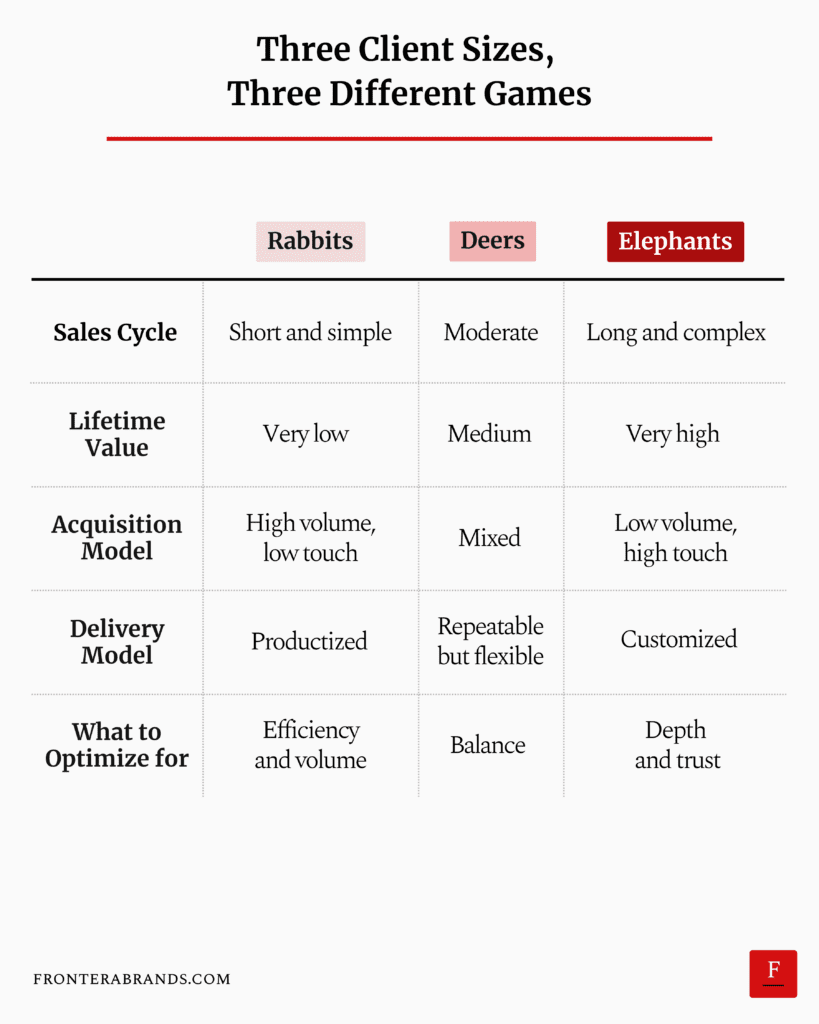
The size of a consulting firm’s clients shapes everything about that firm. Think about it. All these depend on the size of the clients you serve: How much you can earn per client How much you can spend to acquire one client Ease and length of the sales cycle Profit margins Client needs (hence delivery model and messaging) B2B salespeople usually refer to different client sizes as Elephants, Deers, and Rabbits. Rabbits are small clients. They don’t have big budgets. So if you are serving them,...
5 months ago • 3 min read
It’s remarkable how many consulting firm executives are still scared of paid advertising. They almost see it as losing money. Spending budget with no guarantee of return. And I get why. In some industries, like e-commerce or SaaS, paid advertising is common even at very early stages. Because they know if you don’t consistently get customers, you don’t have a business. But consulting firms are different. They can usually get to seven figures through referrals and word-of-mouth alone. So they...
6 months ago • 2 min read
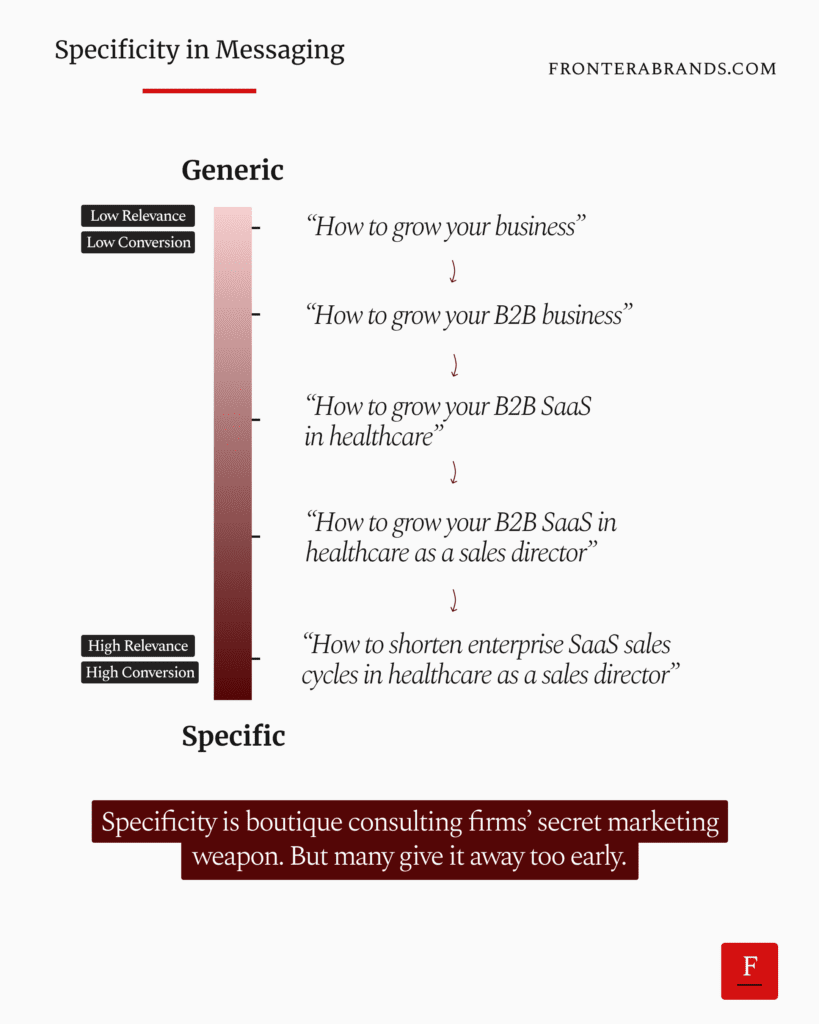
Boutique consulting firms have a secret marketing weapon that larger firms lack. It’s specificity. Let me explain with an example. Look at this: The more specific you get, the more relevant your firm becomes to a specific audience. They intuitively say: “This is for me.” So among dozens of other things trying to catch their attention, they have to click that one. And if they like what they see, they check your firm’s site and social profiles. If what they see there is also specific, they want...
6 months ago • 3 min read
Your consulting firm’s ‘unique’ methodology is not as unique as you think. I know. You’ve refined it meticulously after many client engagements, solving the same problems many times, and turning your firm’s collective experience into a repeatable system. But your competitors also have one. They also gave it a nice name. They are also boasting about the results it delivers. Put yourself in the buyer’s shoes. You have a business problem to solve. You’ve found some consulting firms. And all...
7 months ago • 2 min read
I hear this complaint often from consulting firms: “Organic reach is down. Even our followers don’t see our posts on social media anymore. And Google stopped sending us traffic.” Unfortunately, this eventually happens on every organic channel. The algorithm always changes. Sometimes it starts pushing more ads. Sometimes it starts pushing new content types. Because the algorithm always serves its owner. It’s not our friend. It doesn’t owe us anything. That’s why it doesn’t make sense to depend...
7 months ago • 5 min read